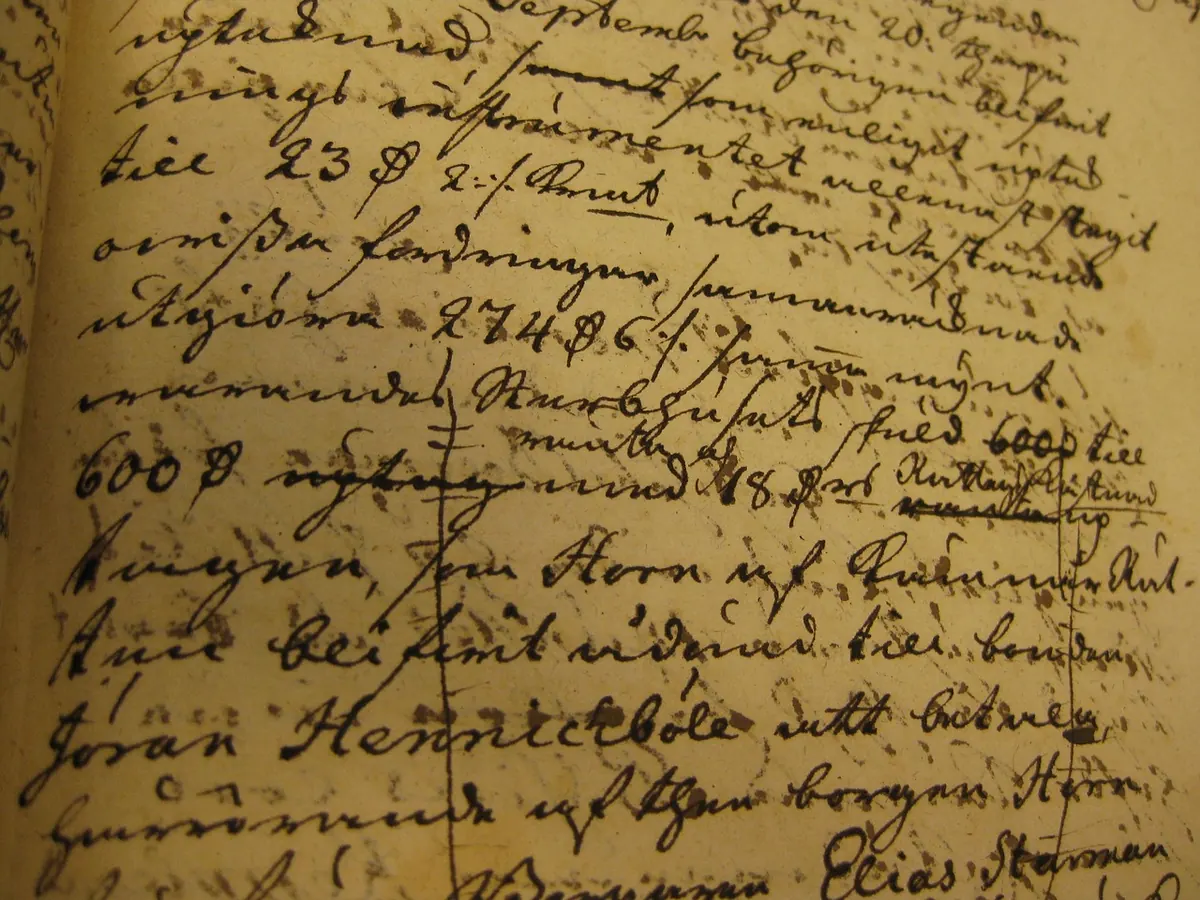
What Census Records Can Tell You About Your Family History
Most families leave behind a shoebox of photographs and a few half-remembered stories. Census records are different. Every ten years, a clerk walked a district, knocked on doors, and wrote down who was home: names, ages, jobs, birthplaces. Those columns were collected for administrative reasons, but for anyone tracing a family they are among the closest things we have to a plain description of ordinary life. They are also surprisingly easy to misread.
What a Census Actually Asked
Questions changed from decade to decade and from country to country, and those differences matter more than beginners expect. The early United States censuses, from 1790 through 1840, named only the head of the household and counted everyone else in age brackets. Enslaved people were recorded as numbers, not names. It was 1850 before every free person in a household was listed individually, with age, sex, race, occupation and the value of any real estate.
Later decades added more. The 1880 census introduced relationship to the head of household and parents' birthplaces. The 1900 census asked for month and year of birth, year of immigration, and how many children a mother had borne and how many were still living. By 1930 you can find whether a family owned a radio and whether anyone was a veteran; the 1940 census records where each person lived five years earlier, the highest grade completed, and income.
In England, Wales and Scotland the pattern was similar. The censuses of 1801 to 1831 were head counts. 1841 was the first to name individuals, though it rounded adult ages down to the nearest five years and asked only whether someone was born in the county. From 1851 you get exact ages, marital status, relationship to the head, and parish of birth. Ireland's 1901 and 1911 censuses survive complete and are free to search online; most earlier Irish returns were lost.
Reading Between the Columns
The occupation column is where a census stops being a list and becomes a life. You learn that a great-great-grandfather was a "hewer" in a coal pit, that an aunt kept a small shop, that a fourteen-year-old was already a "doffer" in a cotton mill. Job titles also hint at status and risk: "pauper inmate" of a workhouse, "servant" in someone else's home, "farmer of 12 acres" versus "farmer of 120."
Ages open another door. A couple who married young, a mother whose surname changes, children appearing at two-year intervals and then stopping: each pattern invites a question. In the 1900 US census, the columns for children born and children living quietly record infant mortality that no one discussed in family stories.
Households, Neighbors and the Shape of a Street
Always read the whole household, not just your direct ancestor. Boarders, lodgers, servants, a widowed mother-in-law and grandchildren often appear together, showing how people shared space and cost in ways that modern families would recognise. A household of nine in a three-room address tells you something no birth certificate can.
Then read the ten households on either side. Neighbors are not filler. Families who migrated together, worshipped together or married between their children usually settled near each other. If three households on one page list the same Irish parish or German village as their birthplace, you have likely found a chain migration and a set of surnames worth chasing.
Children's birthplaces are a route map. A family with children born in Pennsylvania, then Ohio, then Illinois between 1850 and 1860 moved in steps you can date to within a year or two.
Where the Records Live
- United States: federal censuses from 1790 to 1950 are publicly available, the 1950 returns having been released in 2022 under the seventy-two-year rule. Most of the 1890 census was destroyed in a fire in 1921; only fragments remain.
- England, Wales and Scotland: 1841 to 1921 are searchable, often for a fee. The 1921 returns were released in 2022.
- Canada, Australia and New Zealand: coverage begins in the mid-nineteenth century, with release rules that vary by country.
- Elsewhere: national archives, local libraries and family history societies often hold microfilm or indexes that never made it online.
The 1939 Register for England and Wales is not a census, but it functions like one and is widely used as a substitute.
The Limitations You Should Expect
Censuses were taken by hand, by people in a hurry, from information supplied by whoever answered the door. Names were spelled as the clerk heard them, so a family may appear under three different spellings in three decades. Ages drift by one or two years between censuses, partly through error and partly through vanity. Pages are missing, ink is faded, and some people simply avoided the enumerator.
Note the census date: ages were recorded as of that specific day, which may fall well before the visit. Note also that street names and district boundaries change, that women appear under a married name they did not have a decade earlier, and that people in institutions, boarding houses and workhouses can be listed with no family nearby.
Older censuses also contain columns asking about disability in language that is jarring today. Read those entries as a record of what a family reported at the time, not as a diagnosis.
Six Habits That Save Hours
- Work backward from what you already know, and search each decade in turn rather than jumping to a famous ancestor.
- Record the source: country, year, state or county, enumeration district, page and line. You will need it again.
- Treat any single age as a range. Three censuses will narrow a birth year far better than one.
- Search variant spellings and try phonetic indexes; if the surname fails, search the first name plus birthplace.
- Download or note the page, neighbors included. The surrounding names are often the puzzle piece.
- Confirm each finding with a second record: a birth, marriage or death entry, a city directory, a land deed, a military file.
Start With One Family, One Decade
Pick a couple you can already name, find them in one census, and read every column rather than only the name. Then move ten years in either direction and see what changed. Within an hour or two you will have a small, verifiable story: where they lived, what they did, who shared the roof. Build from there, and keep a note of what you could not explain. The unanswered questions are usually where the next record, and the next generation, will take you.
Photo: MarreKrisu / Pixabay